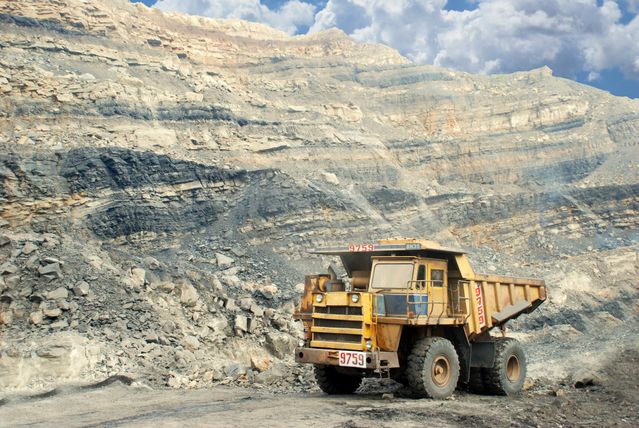

The moment production at a major Bowen Basin operation screeches to a halt, the financial pressure starts to mount. Every hour that ticks by without a penny coming in carries an immediate and tangible cost, not just from lost output but from all the other dominoes that are pushed over as a result, port schedules get mucked up, rail capacity gets used up, and export contracts get jeopardised. Now planned maintenance is a safety net designed to avoid this exact nightmare, but putting it into action requires a level of expertise and sophistication that gets barely acknowledged and all too often underestimated.
Why Coal Mine Maintenance Is Its Own Discipline?
Industrial maintenance principles do most of the heavy lifting, but then the very specific conditions of Bowen Basin mine maintenance come into play and everything gets a lot harder. The sheer volume of abrasive material, the constant pressure to keep production going, the remote locations and the onerous regulatory requirements all combine to make this a very tricky beast to tame. You can’t just service equipment at a time that suits you, like on a quiet Tuesday morning in an urban factory, no, you’ve got to do it during your scheduled downtime, and all too often that’s a fixed window of time that can’t be shifted, regardless of what surprises you find once work gets underway.
And don’t even get me started on regulatory compliance. That’s not something tacked on the side of the maintenance program, that’s baked right into the very fabric of what you’re doing. In Queensland, the mining regulations are super clear about what’s expected of you, you’ve got to do these inspections, meet these safety standards and file these reports, and you’d better be doing them all as part of the maintenance cycle, not just as an afterthought.
Planned Shutdowns Versus Unplanned Failures: The Cost Is Not Even Close
A well-executed planned shutdown, even though that’s expensive, versus a failure that hits during full production? That’s an entirely different ball game financially. It’s not just about whether you get your maintenance done when you want it done, this is about having real control over how your operation runs and how you spend your money. Sourcing the right parts, lining up the right trades for the job, getting your work orders in order and making sure every scope gets completed before the next one starts, that’s all it takes to turn a planned shutdown into a huge success or a total disaster.
You’ve got a fixed window of time between production stopping and when it starts up again. And what happens if one bit of work overruns its allotted time? Well, that just pushes every bit of work that comes after it back by that same amount, and at the scale of a major Bowen Basin operation? That’s when the delays start to really compound, faster than you’d even believe if you’re not part of the industry.
Coal Handling Preparation Plants: The Most Demanding Asset on Site
CHPPs occupy the middle ground of mine processing operations, and so does their maintenance program. Crushers, screens, dense medium vessels, centrifuges and conveyor systems stretching kilometres process massive quantities of abrasive material through several processing phases. Missing a single one of them during the maintenance program leads to potential outages during processing.
Port side equipment presents its own challenges. Ship loaders and stacker reclaimers suffer from structural fatigue due to constant load cycles, corrosion due to the marine environment and the mechanical stress of constant articulation. Maintenance of this equipment requires planning around port schedules because ship loaders cannot be removed from service without disrupting the berthing schedule of the entire port rather than just a single berth.
Finding Experienced Personnel Who Are Ready to Work Immediately
Labour represents the single area where planned maintenance programs constantly face problems. Finding suitable workers available at the right time, holding suitable tickets for that particular plant and familiar with the environment of the Bowen Basin to start productive work straight away is no easy task. Shutdowns require not only labourers but also trade assistants, maintenance workers and even project managers to come to the site at the same time, usually in a very narrow period.
Mines that depend on one single labour pool face considerable risks in terms of capacity. The ability to provide skilled workers in several disciplines on short notice, both for planned shutdowns and for emergency repairs, defines whether the planned maintenance will run smoothly or require improvisation to get done.
Maintenance Optimisation: The Difference Between Reactive and Strategic
The best mines approach their maintenance program as a data-driven rather than a calendar-driven procedure. Analysing failure data, setting intervention intervals according to actual conditions of the equipment and allocating resources to achieve the most benefits operationally define the difference between a successful maintenance program and one running from one event to another. For the major mines of the Bowen Basin, consistent maintenance program performance has a cumulative effect on plant availability and export reliability that cannot be achieved by a single shutdown alone.